Prof. Elisa Bertino (Purdue University, IN, USA)
 Elisa Bertino is Samuel Conte professor of Computer Science at Purdue University.
She serves as Director of the Purdue Cyberspace Security Lab (Cyber2Slab).
Prior to joining Purdue, she was a professor and department head at the Department of
Computer Science and Communication of the University of Milan. She has been a visiting researcher
at the IBM Research Laboratory in San Jose (now Almaden), at Rutgers University, at
Telcordia Technologies. She has also held visiting professor positions at the Singapore
National University and the Singapore Management University. Her recent research focuses
on security and privacy of cellular networks and IoT systems, and on edge analytics for
cybersecurity. Elisa Bertino is a Fellow member of IEEE, ACM, and AAAS. She received the 2002
IEEE Computer Society Technical Achievement Award for “For outstanding contributions to database systems and
database security and advanced data management systems”, the 2005 IEEE Computer Society
Tsutomu Kanai Award for “Pioneering and innovative research contributions to secure distributed systems”,
the 2019-2020 ACM Athena Lecturer Award, and the 2021 IEEE 2021 Innovation in Societal Infrastructure Award.
She received a Honorary Doctorate from Aalborg University in 2021 and a Research Doctorate in
Computer Science from the University of Salerno in 2023. Visit Homepage
Elisa Bertino is Samuel Conte professor of Computer Science at Purdue University.
She serves as Director of the Purdue Cyberspace Security Lab (Cyber2Slab).
Prior to joining Purdue, she was a professor and department head at the Department of
Computer Science and Communication of the University of Milan. She has been a visiting researcher
at the IBM Research Laboratory in San Jose (now Almaden), at Rutgers University, at
Telcordia Technologies. She has also held visiting professor positions at the Singapore
National University and the Singapore Management University. Her recent research focuses
on security and privacy of cellular networks and IoT systems, and on edge analytics for
cybersecurity. Elisa Bertino is a Fellow member of IEEE, ACM, and AAAS. She received the 2002
IEEE Computer Society Technical Achievement Award for “For outstanding contributions to database systems and
database security and advanced data management systems”, the 2005 IEEE Computer Society
Tsutomu Kanai Award for “Pioneering and innovative research contributions to secure distributed systems”,
the 2019-2020 ACM Athena Lecturer Award, and the 2021 IEEE 2021 Innovation in Societal Infrastructure Award.
She received a Honorary Doctorate from Aalborg University in 2021 and a Research Doctorate in
Computer Science from the University of Salerno in 2023. Visit Homepage
Seminar title: Security of Cellular Networks
Go to Top
Dr. Luc Bläser (Dfinity, Switzerland)
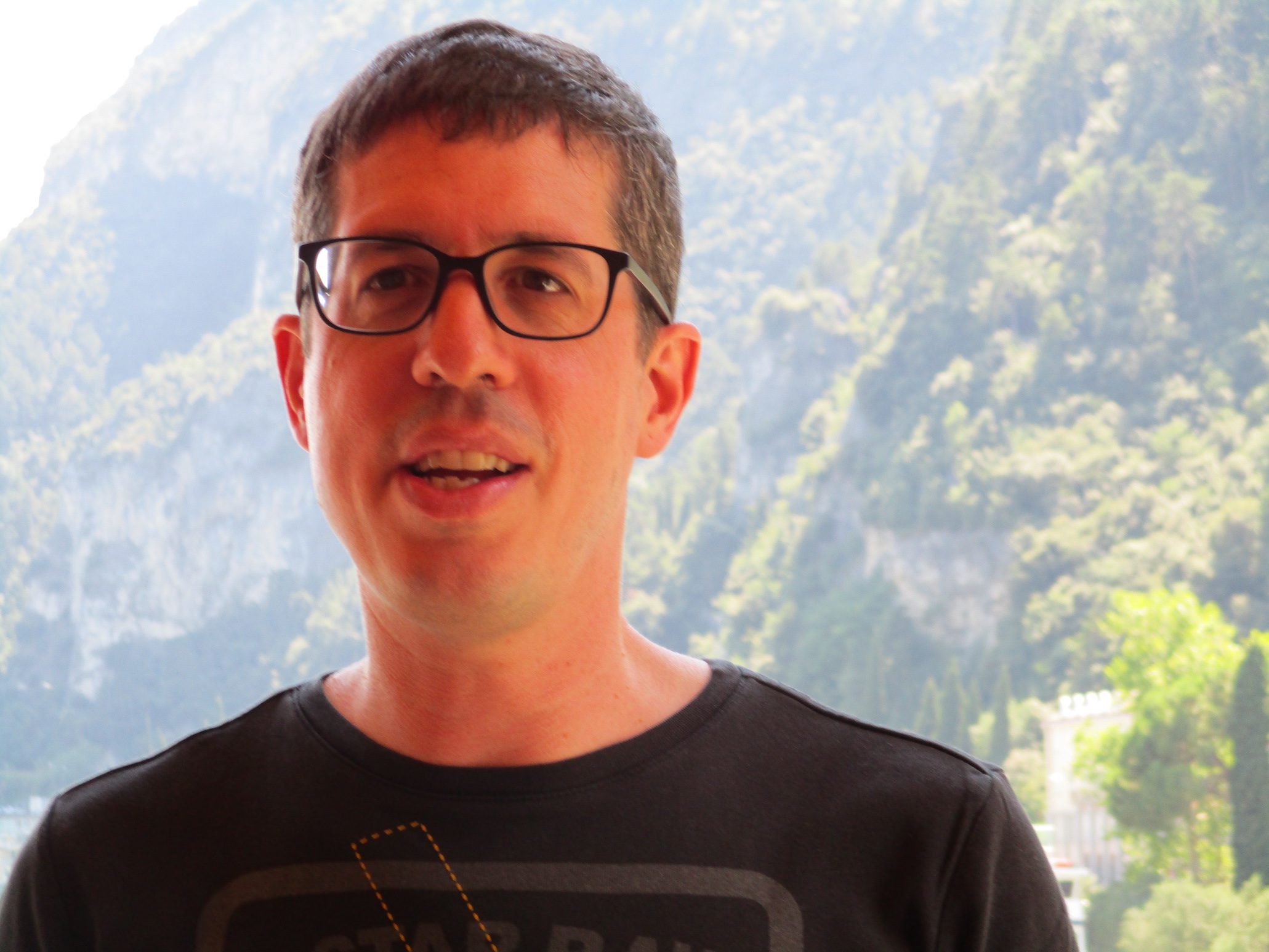 Luc is a software engineer in the Motoko programming language team at the DFINITY foundation, mainly focusing on the runtime system and garbage collection aspects. Before joining the Motoko team, he was a professor of software engineering, researching and teaching in the area of programming languages, runtime system and compiler construction, concurrency and parallelization, as well as, on code analysis. He holds a PhD in programming languages and runtime systems from ETH Zurich.
Seminar title: Motoko - The Programming Language of the Internet Computer
Go to Top
Dr. Jan Camenisch (Dfinity, Switzerland)
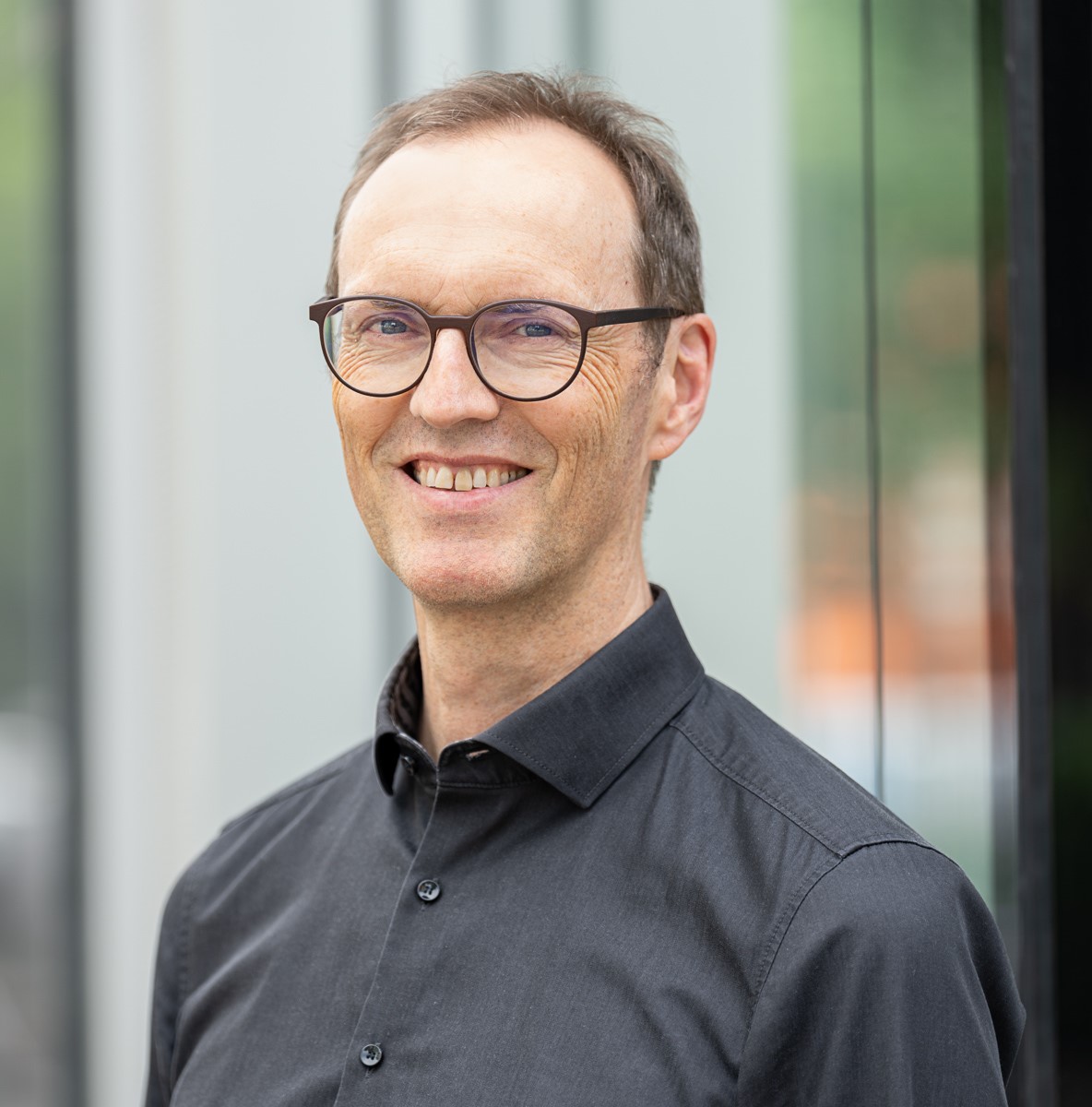 Jan Camenisch is CTO at the DFINITY Foundation which is a major contributor the Internet Computer blockchain.
He also serves on Sovrin‘s Technical Governance Board. Jan has published over 150 widely cited papers,
was granted about 140 patents worldwide, gave numerous keynotes and invited talks at international
conferences, and has received a number of awards for his work, including the 2010 ACM SIGSAC Outstanding
Innovation Award, the 2013 IEEE Computer Society Technical Achievement Award, and the 2018 IFIP Kristian Beckman Award.
Jan is the main inventor of Identity Mixer, a unique cryptographic protocol suite for privacy-preserving authentication
and transfer of certified attributes. Identity mixer has been integrated into Hyperledger Fabric and forms the
cryptographic core of Sovrin. Jan was also key in designing the related Direct Anonymous Attestation (DAA)
and making the protocol a TCG standard that got implemented in millions of devices. Lately, Jan was involved
in bringing the newest protocol variant of DAA to FIDO and W3C web authentication. Jan was leading the FP7 European research
consortia PRIME and PrimeLife on privacy and identity management. He and his team have participated in many other projects
including ABC4Trust, AU2EU, FutureID, and FutureTPM. Jan has held an advanced ERC grant from 2013-2018 for research on
cryptography for end users. Visit Homepage
Jan Camenisch is CTO at the DFINITY Foundation which is a major contributor the Internet Computer blockchain.
He also serves on Sovrin‘s Technical Governance Board. Jan has published over 150 widely cited papers,
was granted about 140 patents worldwide, gave numerous keynotes and invited talks at international
conferences, and has received a number of awards for his work, including the 2010 ACM SIGSAC Outstanding
Innovation Award, the 2013 IEEE Computer Society Technical Achievement Award, and the 2018 IFIP Kristian Beckman Award.
Jan is the main inventor of Identity Mixer, a unique cryptographic protocol suite for privacy-preserving authentication
and transfer of certified attributes. Identity mixer has been integrated into Hyperledger Fabric and forms the
cryptographic core of Sovrin. Jan was also key in designing the related Direct Anonymous Attestation (DAA)
and making the protocol a TCG standard that got implemented in millions of devices. Lately, Jan was involved
in bringing the newest protocol variant of DAA to FIDO and W3C web authentication. Jan was leading the FP7 European research
consortia PRIME and PrimeLife on privacy and identity management. He and his team have participated in many other projects
including ABC4Trust, AU2EU, FutureID, and FutureTPM. Jan has held an advanced ERC grant from 2013-2018 for research on
cryptography for end users. Visit Homepage
Seminar title: Internet Computer - Building apps on the Internet
Go to Top
Mr. André Catry (C-Resiliens, Sweden)
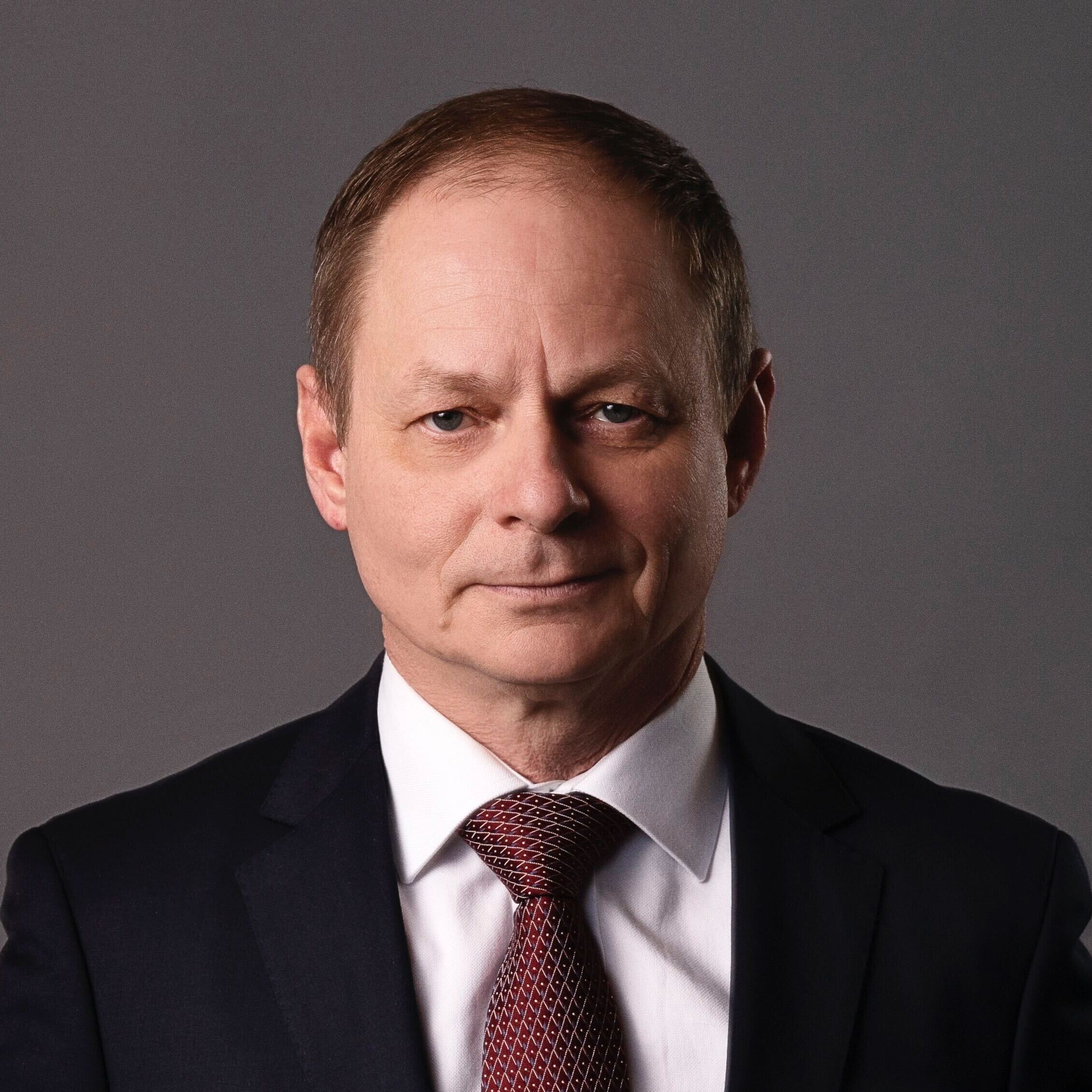 André Catry is the CTO of C-Resiliens. André has more than 30 years of experience in advanced offensive and defensive cyber risk management. He has been doing assignments for the Swedish Defense Forces related to concept development of the cyber defense unit - IT-försvarsförbandet (ITF). In addition, he has acted as a principal administrative officer at the Swedish Security Service. André has several years of experience as a senior IT-security consultant and has worked on many high-profile cases and investigations. Furthermore, he has participated as a technical expert in eSams work on the conditions for authorities to use cloud services legally and appropriately. Besides being a renowned IT security expert, he is also an award-winning author.
Seminar title: Trust no one
Go to Top
Prof. Alexandra Dmitrienko (Würzburg University, Germany)
 Alexandra Dmitrienko is an Associate Professor and head of the Secure Software Systems group at the University of
Wuerzburg in Germany. Before taking her current faculty position in 2018, she collected an extensive background in
security institutions in Germany and Switzerland, including Ruhr-University Bochum (2008-2011),
Fraunhofer Institute for Information Security in Darmstadt (2011-2015), and ETH Zurich (2016-2017). She
earned her PhD in Security and Information Technology from TU Darmstadt (2015), where her dissertation
focused on the security and privacy of mobile systems and applications, and was recognized with awards
from the European Research Consortium in Informatics and Mathematics (ERCIM STM WG 2016 Award) and Intel (
Intel Doctoral Student Honor Award, 2013). Over the years, her research interests spawned across various
topics such as secure software engineering, systems security and privacy, security and privacy of mobile,
cyber-physical, and distributed systems. Today, her recent research also largely focuses on security and
privacy aspects of Artificial Intelligence methods. Visit Homepage
Alexandra Dmitrienko is an Associate Professor and head of the Secure Software Systems group at the University of
Wuerzburg in Germany. Before taking her current faculty position in 2018, she collected an extensive background in
security institutions in Germany and Switzerland, including Ruhr-University Bochum (2008-2011),
Fraunhofer Institute for Information Security in Darmstadt (2011-2015), and ETH Zurich (2016-2017). She
earned her PhD in Security and Information Technology from TU Darmstadt (2015), where her dissertation
focused on the security and privacy of mobile systems and applications, and was recognized with awards
from the European Research Consortium in Informatics and Mathematics (ERCIM STM WG 2016 Award) and Intel (
Intel Doctoral Student Honor Award, 2013). Over the years, her research interests spawned across various
topics such as secure software engineering, systems security and privacy, security and privacy of mobile,
cyber-physical, and distributed systems. Today, her recent research also largely focuses on security and
privacy aspects of Artificial Intelligence methods. Visit Homepage
Seminar title: Security and Privacy Challenges in Federated Learning Systems and Applications
Go to Top
Prof. Joan Feigenbaum (Yale University, CT, USA)
 Joan Feigenbaum is the Grace Murray Hopper Professor of Computer Science at Yale University,
where she also holds a courtesy appointment as Professor of Economics. She received a BA in Mathematics from
Harvard and a Ph.D. in Computer Science from Stanford. Between finishing her Ph.D. in 1986 and starting at Yale
in 2000, she was with AT&T, where she participated broadly in the company's Information-Sciences research agenda,
e.g., by creating a research group in Algorithms and Distributed Data, of which she was the manager in 1998-99.
Professor Feigenbaum's research interests include security, privacy, anonymity, and accountability; Internet algorithmics;
and computational complexity. While at Yale, she has been a principal in several high-profile activities, including the
DHS-funded Pri-Fi Project, the DARPA-funded DISSENT project, and the NSF-funded PORTIA project. Her many service contributions
to the research community include Program Chair of Crypto '91, Editor-in-Chief of the Journal of Cryptology (1997-2002),
Program Co-Chair of the ACM Conference on Electronic Commerce (2004), Program Chair of the ACM Symposium on Theory of Computing (2013),
Department Chair of the Yale Computer Science Department (July 2014 through June 2017), General Chair of the inaugural ACM
Symposium on Computer Science and Law (2019), and ACM Vice President (July 2020 through June 2022). Professor Feigenbaum is an
Amazon Scholar, a Fellow of the ACM, a Fellow of the AAAS, a Member of the Connecticut Academy of Science and Engineering, and a
Connecticut Technology Council Woman of Innovation. In 1998, she was an invited speaker at the International Congress of Mathematicians.
In May 2020, she won the Test-of-Time Award from the IEEE Symposium on Security and Privacy for her 1996 paper (with Matt Blaze and Jack Lacy)
entitled "Decentralized Trust Management." Visit Homepage
Joan Feigenbaum is the Grace Murray Hopper Professor of Computer Science at Yale University,
where she also holds a courtesy appointment as Professor of Economics. She received a BA in Mathematics from
Harvard and a Ph.D. in Computer Science from Stanford. Between finishing her Ph.D. in 1986 and starting at Yale
in 2000, she was with AT&T, where she participated broadly in the company's Information-Sciences research agenda,
e.g., by creating a research group in Algorithms and Distributed Data, of which she was the manager in 1998-99.
Professor Feigenbaum's research interests include security, privacy, anonymity, and accountability; Internet algorithmics;
and computational complexity. While at Yale, she has been a principal in several high-profile activities, including the
DHS-funded Pri-Fi Project, the DARPA-funded DISSENT project, and the NSF-funded PORTIA project. Her many service contributions
to the research community include Program Chair of Crypto '91, Editor-in-Chief of the Journal of Cryptology (1997-2002),
Program Co-Chair of the ACM Conference on Electronic Commerce (2004), Program Chair of the ACM Symposium on Theory of Computing (2013),
Department Chair of the Yale Computer Science Department (July 2014 through June 2017), General Chair of the inaugural ACM
Symposium on Computer Science and Law (2019), and ACM Vice President (July 2020 through June 2022). Professor Feigenbaum is an
Amazon Scholar, a Fellow of the ACM, a Fellow of the AAAS, a Member of the Connecticut Academy of Science and Engineering, and a
Connecticut Technology Council Woman of Innovation. In 1998, she was an invited speaker at the International Congress of Mathematicians.
In May 2020, she won the Test-of-Time Award from the IEEE Symposium on Security and Privacy for her 1996 paper (with Matt Blaze and Jack Lacy)
entitled "Decentralized Trust Management." Visit Homepage
Seminar title: Privacy-preserving audience targeting
Go to Top
Dr. Fabrizio Gagliardi (ACM Europe Council)
 Doctor degree in 1974 at the University of Pisa in Italy.
Spent the first 30 years of his career (1975-2005) at the European Centre for Particle Physics, in Geneva, Switzerland,
where he was responsible for the design and implementation of the worldwide computing distributed infrastructure with projects such EU-DataGrid and EGEE.
Director for external research in LATAM and EMEA at Microsoft (2005-2013).
Since 2013 senior advisor to the Barcelona Supercomputing Centre and General Manager of the RISC2 HPC project to support an EU and Latam dialogue on HPC.
Director of the first ACM Europe conference in Barcelona in 2017.
Director of the 2019 ACM HPC summer school in Barcelona in 2019, 2021 and in August 2022.
Director of the EU-ASEAN HPC school, in Bangkok, in July 2021 and in December 2022.
Formerly visiting professor, at the Gran Sasso Scientific Institute, L’Aquila, Italy and leader of many EU funded projects in Europe and elsewhere.
In 2009 he started the ACM European council which he chaired for the first 4 years.
Then in 2013 he started the ACM Europe Policy Council that he chaired also for 4 years.
ACM is the largest and oldest Computing professional association.
He won a number of prizes, including the ACM President Award in 2013 and again in 2018.
The citation in 2013 reads: In recognition of his tireless leadership in sharpening the visibility of ACM and its professional and educational activities throughout Europe. Serving as chair of ACM-Europe during its inaugural four years
and in 2018 honored for his tireless efforts as the spirit behind ACM's public policy arm in Europe, EUACM, having served as its chair since 2013.
Doctor degree in 1974 at the University of Pisa in Italy.
Spent the first 30 years of his career (1975-2005) at the European Centre for Particle Physics, in Geneva, Switzerland,
where he was responsible for the design and implementation of the worldwide computing distributed infrastructure with projects such EU-DataGrid and EGEE.
Director for external research in LATAM and EMEA at Microsoft (2005-2013).
Since 2013 senior advisor to the Barcelona Supercomputing Centre and General Manager of the RISC2 HPC project to support an EU and Latam dialogue on HPC.
Director of the first ACM Europe conference in Barcelona in 2017.
Director of the 2019 ACM HPC summer school in Barcelona in 2019, 2021 and in August 2022.
Director of the EU-ASEAN HPC school, in Bangkok, in July 2021 and in December 2022.
Formerly visiting professor, at the Gran Sasso Scientific Institute, L’Aquila, Italy and leader of many EU funded projects in Europe and elsewhere.
In 2009 he started the ACM European council which he chaired for the first 4 years.
Then in 2013 he started the ACM Europe Policy Council that he chaired also for 4 years.
ACM is the largest and oldest Computing professional association.
He won a number of prizes, including the ACM President Award in 2013 and again in 2018.
The citation in 2013 reads: In recognition of his tireless leadership in sharpening the visibility of ACM and its professional and educational activities throughout Europe. Serving as chair of ACM-Europe during its inaugural four years
and in 2018 honored for his tireless efforts as the spirit behind ACM's public policy arm in Europe, EUACM, having served as its chair since 2013.
Seminar title: ACM recent history in Europe
Go to Top
Prof. Jean-Pierre Hubaux (EPFL, Switzerland)
 Prof. Jean-Pierre Hubaux is the academic director of the EPFL Center for Digital Trust (C4DT).
For its whole duration (April 2018 - December 2021), he led the Data Protection in Personalized Health (DPPH) project funded by the ETH Council. Until December 2021,
he was a co-chair of the Data Security Work Stream of the Global Alliance for Genomics and Health (GA4GH).
From 2008 to 2019 he was one of the seven commissioners of the Swiss FCC. He is a Fellow of both IEEE and ACM. Recent awards:
three of his papers obtained distinctions at the IEEE Symposium on Security and Privacy, the flagship event on the topic
(in 2015, 2018 and 2021). He is among the most cited researchers in privacy protection and in information security.
He is a co-founder of Tune Insight SA. Since February 2023, he is also advising the EPFL Presidency on how to best protect the
EPFL IT infrastructure against cyberattacks. Visit Homepage
Prof. Jean-Pierre Hubaux is the academic director of the EPFL Center for Digital Trust (C4DT).
For its whole duration (April 2018 - December 2021), he led the Data Protection in Personalized Health (DPPH) project funded by the ETH Council. Until December 2021,
he was a co-chair of the Data Security Work Stream of the Global Alliance for Genomics and Health (GA4GH).
From 2008 to 2019 he was one of the seven commissioners of the Swiss FCC. He is a Fellow of both IEEE and ACM. Recent awards:
three of his papers obtained distinctions at the IEEE Symposium on Security and Privacy, the flagship event on the topic
(in 2015, 2018 and 2021). He is among the most cited researchers in privacy protection and in information security.
He is a co-founder of Tune Insight SA. Since February 2023, he is also advising the EPFL Presidency on how to best protect the
EPFL IT infrastructure against cyberattacks. Visit Homepage
Seminar title: Secure and Privacy-Preserving Decentralized ML
Go to Top
Prof. Keith Martin (Royal Holloway, University of London, United Kingdom)
 Prof. Keith Martin is a professor of information security at Royal Holloway, University of London and director of the EPSRC Centre for Doctoral Training in Cyber Security for the Everyday. He has broad research interests, with a focus on application of cryptography and geopolitical aspects of cyber security.
Keith holds a degree in Mathematics from the University of Glasgow and a PhD from Royal Holloway.
Following research positions at the University of Adelaide and the Katholieke Universiteit Leuven, Keith returned to Royal Holloway in 2000,
where he co-created the successful distance learning MSc in Information Security, and served as Director of the Information Security Group from 2010 to 2015.
Keith has over 100 research publications in cyber security, as well as articles in the popular and professional press.
He is author of the text book Everyday Cryptography (OUP, 2012), now in its second edition, and the popular science book Cryptography:
The Key to Digital Security, How it Works and Why it Matters (Norton, 2020). He has also presented courses on cyber security to a wide
range of audiences, including specialist industrial short courses, the general public, and schools. Visit Homepage
Prof. Keith Martin is a professor of information security at Royal Holloway, University of London and director of the EPSRC Centre for Doctoral Training in Cyber Security for the Everyday. He has broad research interests, with a focus on application of cryptography and geopolitical aspects of cyber security.
Keith holds a degree in Mathematics from the University of Glasgow and a PhD from Royal Holloway.
Following research positions at the University of Adelaide and the Katholieke Universiteit Leuven, Keith returned to Royal Holloway in 2000,
where he co-created the successful distance learning MSc in Information Security, and served as Director of the Information Security Group from 2010 to 2015.
Keith has over 100 research publications in cyber security, as well as articles in the popular and professional press.
He is author of the text book Everyday Cryptography (OUP, 2012), now in its second edition, and the popular science book Cryptography:
The Key to Digital Security, How it Works and Why it Matters (Norton, 2020). He has also presented courses on cyber security to a wide
range of audiences, including specialist industrial short courses, the general public, and schools. Visit Homepage
Seminar title: Cyber Insecurity - Bits and Bytes of Wisdom on the Challenges of Researching Cyber Security
Go to Top
Prof. Valtteri Niemi (University of Helsinki, Helsinki, Finland)
 Valtteri Niemi is a Professor of Computer Science in University of Helsinki and leads the Secure Systems research group. Earlier he has been a Professor of Mathematics in two other Finnish universities: University of Vaasa during 1993-97 and University of Turku during 2012-2015. Between these two academic positions Niemi served for 15 years in various roles at Nokia Research Center and was nominated as a Nokia Fellow in 2009. At Nokia, Dr. Niemi worked for wireless security, including cryptological aspects and privacy-enhancing technologies. He participated 3GPP SA3 (security) standardization group from its beginning and during 2003-2009 he was the chairman of the group. He has published more than 100 scientific articles and he is a co-author of 4 books and more than 35 patent families. Visit Homepage
Seminar title: Postquantum Impact and other Issues with 5G/6G Security
Go to Top
Prof. Cristina Nita-Rotaru (Northeastern University, MA, USA)
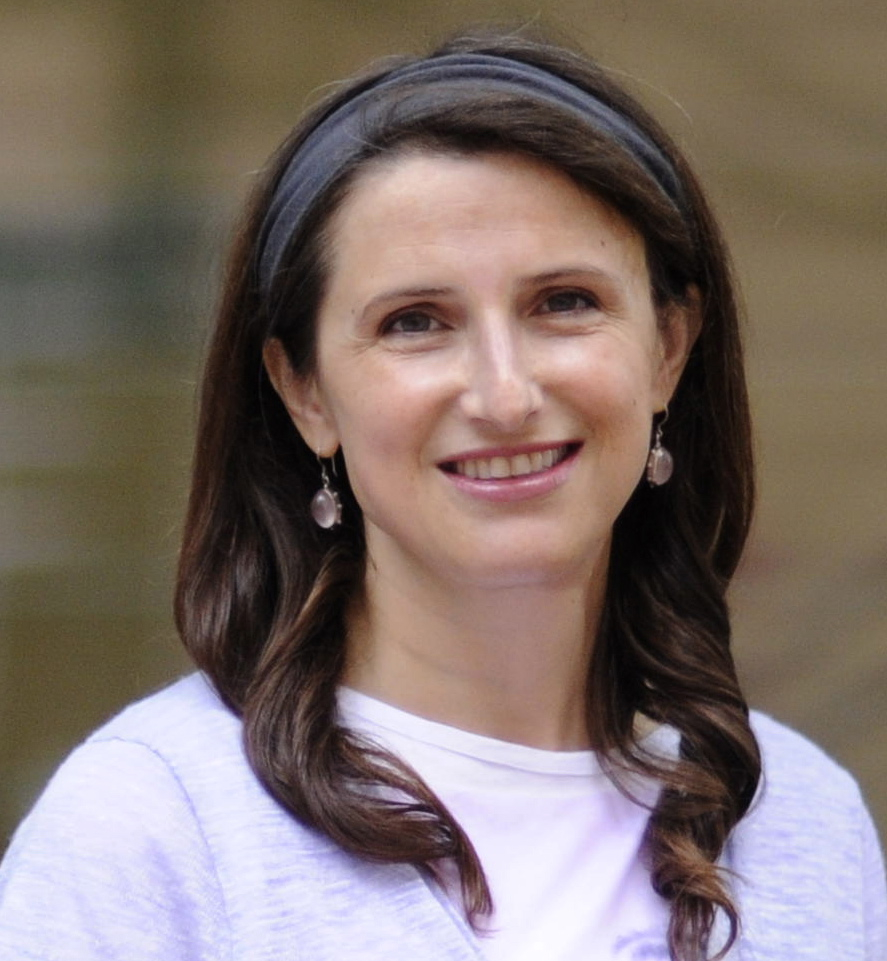 Cristina Nita-Rotaru is a Professor of Computer Science in the Khoury College of Computer Sciences at Northeastern University where she leads the Network and Distributed Systems Security Laboratory (NDS2). Prior to joining Northeastern she was a faculty in the Department of Computer Science at Purdue University (2003 - 2015). She served as Associate Dean of Faculty at Northeastern University (2017 - 2020) and as an Assistant Director for CERIAS at Purdue University (2011 - 2013). Her research lies at the intersection of security, distributed systems, and computer networks. The overarching goal of her work is designing and building secure and resilient distributed systems and network protocols, with assurance that the deployed implementations provide their security, resilience, and performance goals. Her work received several best paper awards in ACM SACMAT 2022, IEEE SafeThings 2019, NDSS 2018, ISSRE 2017, DSN 2015, two IETF/IRTF Applied Networking Research Prize in 2018 and 2016, and Test-of-Time award in ACM SACMAT 2022. She is a recipient of the NSF Career Award in 2006. Cristina Nita-Rotaru has served on the program committee of numerous conferences in networking, distributed systems and security such as IEEE S&P, USENIX Security, ACM CCS, NDSS, ACM Wisec, USENIX OSDI, USENIX ATC, ACM SOCC, ACM SIGCOMM, ACM CoNEXT, IEEE INFOCOM, IEEE ICNP, WWW, IEEE ICDCS, IEEE/IFIP DSN, Eurosys, and Euro S&P. She was an Associate Editor for IEEE Transactions on Computers, ACM Transactions on Information Systems Security, Computer Networks, IEEE Transactions on Mobile Computing and IEEE Transactions on Dependable and Secure Systems. She was a chair for ACM Wisec 2010, IEEE CNS 2013, ACM GameSec 2013, IEEE DSN 2016, and IEEE ICNP 2018. She was a general co-chair for IEEE DSN 2022 and NDSS 2023. She is the co-chair of the NDSS Steering Committee.
Visit Homepage
Cristina Nita-Rotaru is a Professor of Computer Science in the Khoury College of Computer Sciences at Northeastern University where she leads the Network and Distributed Systems Security Laboratory (NDS2). Prior to joining Northeastern she was a faculty in the Department of Computer Science at Purdue University (2003 - 2015). She served as Associate Dean of Faculty at Northeastern University (2017 - 2020) and as an Assistant Director for CERIAS at Purdue University (2011 - 2013). Her research lies at the intersection of security, distributed systems, and computer networks. The overarching goal of her work is designing and building secure and resilient distributed systems and network protocols, with assurance that the deployed implementations provide their security, resilience, and performance goals. Her work received several best paper awards in ACM SACMAT 2022, IEEE SafeThings 2019, NDSS 2018, ISSRE 2017, DSN 2015, two IETF/IRTF Applied Networking Research Prize in 2018 and 2016, and Test-of-Time award in ACM SACMAT 2022. She is a recipient of the NSF Career Award in 2006. Cristina Nita-Rotaru has served on the program committee of numerous conferences in networking, distributed systems and security such as IEEE S&P, USENIX Security, ACM CCS, NDSS, ACM Wisec, USENIX OSDI, USENIX ATC, ACM SOCC, ACM SIGCOMM, ACM CoNEXT, IEEE INFOCOM, IEEE ICNP, WWW, IEEE ICDCS, IEEE/IFIP DSN, Eurosys, and Euro S&P. She was an Associate Editor for IEEE Transactions on Computers, ACM Transactions on Information Systems Security, Computer Networks, IEEE Transactions on Mobile Computing and IEEE Transactions on Dependable and Secure Systems. She was a chair for ACM Wisec 2010, IEEE CNS 2013, ACM GameSec 2013, IEEE DSN 2016, and IEEE ICNP 2018. She was a general co-chair for IEEE DSN 2022 and NDSS 2023. She is the co-chair of the NDSS Steering Committee.
Visit Homepage
Seminar title: The Quest for Vulnerability-Free Network Protocols
Go to Top
Prof. Ahmad-Reza Sadeghi (TU Darmstadt, Germany)
 Ahmad-Reza Sadeghi is a professor of Computer Science and the head of the System Security Lab at the Technical University of Darmstadt, Germany. He has led several Collaborative Research Labs with Intel since 2012 and Huawei since 2019. He has studied Mechanical and Electrical Engineering and holds a Ph.D. in Computer Science from the University of Saarland, Germany. Before academia, he worked in the R&D of IT enterprises, including Ericsson Telecommunications. He has been continuously contributing to the security and privacy research field. He was Editor-In-Chief of IEEE Security and Privacy Magazine and had been serving on the editorial board of ACM TODAES, ACM TIOT, and ACM DTRAP. He received the renowned German “Karl Heinz Beckurts” award for his influential research on Trusted and Trustworthy Computing. This award honors excellent scientific achievements with a high impact on industrial innovations in Germany. In 2018, he received the ACM SIGSAC Outstanding Contributions Award for dedicated research, education, and management leadership in the security community and pioneering contributions in content protection, mobile security, and hardware-assisted security. In 2021, he was honored with the Intel Academic Leadership Award at USENIX Security conference for his influential research on cybersecurity, particularly hardware-assisted security. In 2022 he received the prestigious European Research Council (ERC) Advanced Grant.
Seminar title: The Protection Paradox - Navigating the Dilemmas of Evolving Systems Security
Go to Top
Prof. Pierangela Samarati (Università degli Studi di Milano, Italy)
 Pierangela Samarati is a Professor at the Department of Computer
Science of the Università degli Studi di Milano, Italy. Her main
research interests are on data and applications security and privacy,
especially in emerging scenarios. She has participated in several
EU-funded projects involving different aspects of information
protection, also serving as project coordinator. She has published
more than 290 peer-reviewed articles in international journals,
conference proceedings, and book chapters. She has been Computer
Scientist in the Computer Science Laboratory at SRI, CA (USA). She
has been a visiting researcher at the Computer Science Department of
Stanford University, CA (USA), and at the Center for Secure
Information Systems of George Mason University, VA (USA). She is the
chair of the IEEE Systems Council Technical Committee on Security and
Privacy in Complex Information Systems (TCSPCIS), of the ERCIM
Security and Trust Management Working Group (STM), and of the ACM
Workshop on Privacy in the Electronic Society (WPES). She is a member
of several steering committees. She is IEEE Fellow (2012), ACM Fellow
(2021), IFIP Fellow (2021). She has received the IEEE Computer
Society Technical Achievement Award (2016) and the ESORICS Outstanding
Research Award (2018). Visit Homepage
Pierangela Samarati is a Professor at the Department of Computer
Science of the Università degli Studi di Milano, Italy. Her main
research interests are on data and applications security and privacy,
especially in emerging scenarios. She has participated in several
EU-funded projects involving different aspects of information
protection, also serving as project coordinator. She has published
more than 290 peer-reviewed articles in international journals,
conference proceedings, and book chapters. She has been Computer
Scientist in the Computer Science Laboratory at SRI, CA (USA). She
has been a visiting researcher at the Computer Science Department of
Stanford University, CA (USA), and at the Center for Secure
Information Systems of George Mason University, VA (USA). She is the
chair of the IEEE Systems Council Technical Committee on Security and
Privacy in Complex Information Systems (TCSPCIS), of the ERCIM
Security and Trust Management Working Group (STM), and of the ACM
Workshop on Privacy in the Electronic Society (WPES). She is a member
of several steering committees. She is IEEE Fellow (2012), ACM Fellow
(2021), IFIP Fellow (2021). She has received the IEEE Computer
Society Technical Achievement Award (2016) and the ESORICS Outstanding
Research Award (2018). Visit Homepage
Seminar title: Data Security and Privacy in Emerging Scenarios
Go to Top
Prof. Martina Angela Sasse (Ruhr University Bochum, Germany)
 M. Angela Sasse is the Professor of Human-Centre Security at Ruhr University Bochum in Germany, and also still part-time Professor of Human-Centred Technology in the Department of Computer Science, University College London. A researcher in human-computer interaction and UXP by background (she holds a Masters in Occupational Psychology and a PhD in Computer Science), since the late 90s her research has pioneered the human-centred perspective on security, privacy, and trust. She was elected a Fellow of the Royal Academy of Engineering in the UK in 2015, and of the German National Academy of Science Leopoldina in Germany in 2023.
Visit Homepage
M. Angela Sasse is the Professor of Human-Centre Security at Ruhr University Bochum in Germany, and also still part-time Professor of Human-Centred Technology in the Department of Computer Science, University College London. A researcher in human-computer interaction and UXP by background (she holds a Masters in Occupational Psychology and a PhD in Computer Science), since the late 90s her research has pioneered the human-centred perspective on security, privacy, and trust. She was elected a Fellow of the Royal Academy of Engineering in the UK in 2015, and of the German National Academy of Science Leopoldina in Germany in 2023.
Visit Homepage
Seminar title: Why CISOs struggle with human-centred security
Go to Top
Prof. Fred Schneider (Cornell University, NY, USA)
 Fred B. Schneider is Samuel B. Eckert Professor of Computer Science at Cornell University. He joined Cornell's faculty in Fall 1978 and served as department chair from 2014-2018, having completed a Ph.D. at Stony Brook University and a B.S. in Engineering at Cornell in 1975.
Schneider's research has focused on various aspects of trustworthy systems --- systems that will perform as expected, despite failures and attacks. His early work concerned formal methods to aid in the design and implementation of concurrent and distributed systems that satisfy their specifications. He is author of two texts on that subject: On Concurrent Programming and (co-authored with D. Gries) A Logical Approach to Discrete Mathematics. He and Bowen Alpern devised the now standard formal definition of "liveness properties" and provided the proof that safety and liveness are a fundamental basis for all trace-properties; that work received the 2018 Edsger W. Dijkstra Prize in Distributed Computing. But Schneider is also known for his research in theory and algorithms for building fault-tolerant distributed systems. His paper on the "state machine approach" for managing replication received (in 2007) an SOSP "Hall of Fame" award for seminal research. And his paper on fail-stop processors (with Richard Schlichting) received the Jean-Claude Laprie Award in Dependable Computing. More recently, his interests have turned to system security. His work characterizing what policies can be enforced with various classes of defenses is widely cited, and it is seen as advancing the nascent science base for security. He is also engaged in research concerning legal and economic measures for improving system trustworthiness.
Schneider was elected Fellow of the American Association for the Advancement of Science (1992), the Association of Computing Machinery (1995), and the Institute of Electrical and Electronics Engineers (2008). He was named Professor-at-Large at the University of Tromso (Norway) in 1996 and was awarded a Doctor of Science honoris causa by the University of Newcastle-upon-Tyne in 2003 for his work in computer dependability and security. He received the 2012 IEEE Emanuel R. Piore Award for "contributions to trustworthy computing through novel approaches to security, fault-tolerance and formal methods for concurrent and distributed systems". The U.S. National Academy of Engineering elected Schneider to membership in 2011, the Norges Tekniske Vitenskapsakademi (Norwegian Academy of Technological Sciences) named him a foreign member in 2010, and the American Academy of Arts & Sciences elected him to membership in 2017.
Visit Homepage
Seminar title: Using Hyperproperties
Go to Top
Prof. Moti Yung (Google and Columbia University, NY, USA)
 Moti Yung is a Security and Privacy Scientist with a main interest in Cryptography: its Theory and its Real life Applications. He graduated from Columbia University in 1988 and is an adjunct senior research faculty at Columbia till today. In parallel he has had an industrial research career working at places like IBM, RSA Labs. (EMC), Google, and Snap. Yung is a fellow of ACM, of IEEE, of the International Association for Cryptologic Research (IACR) and the European Association for Theoretical Computer Science (EATCS). Among his awards are ACM's SIGSAC Outstanding Innovation Award in 2014, and 2018 IEEE Computer Society W. Wallace McDowell Award. His research covers broad areas: from the theory and foundations, to applied systems, and actual engineering efforts of cryptography and secure systems. Visit Homepage
Seminar title: Designing for an Evolving Ecosystem: the Advertisement Exchange Case
Go to Top